
Curb Appeal Security: Using Lights & Decor to Deter Intruders
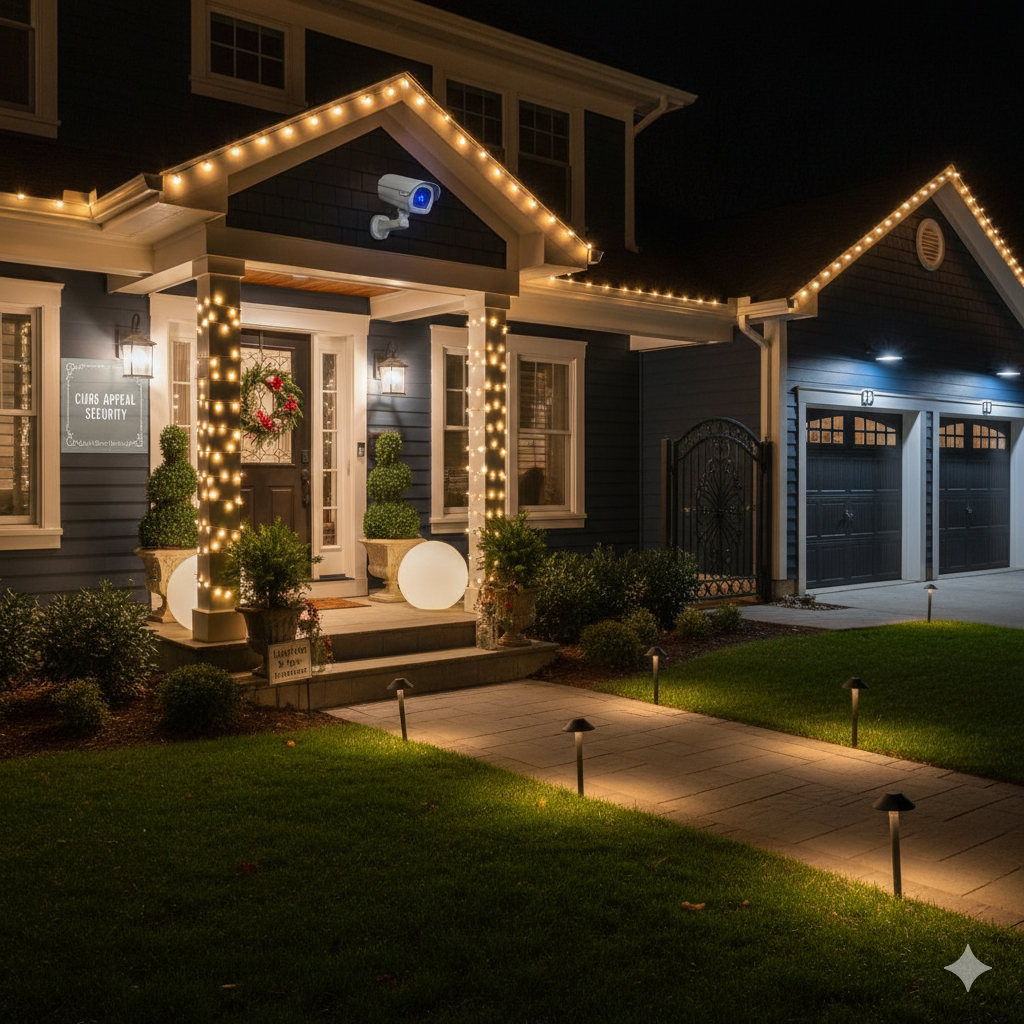
When most people think of "curb appeal," they think of landscaping and paint colors. At Shield Line Consulting, when we look at curb appeal, we see a security statement.
Every element of your property's exterior—from the height of your shrubs to the brightness of your walkways—sends a signal to a potential intruder. A well-maintained, strategically lit property signals high visibility and low opportunity, making a thief move on to a softer target.
Here is a veteran police officer’s breakdown of three critical areas where you can turn simple curb appeal into effective security deterrence.
1. Landscaping: Eliminate the "Criminal Hiding Spot"
Vegetation should be a deterrent, not an ally to intruders. Burglars look for places where they can observe a unit without being seen, or where they can gain hidden access.
The 3-Foot Rule: All shrubs, bushes, and hedges near walkways, doors, and ground-floor windows should be trimmed to no higher than three feet (around waist height). This eliminates immediate cover.
The 7-Foot Clearance: Low-hanging tree limbs should be trimmed to at least seven feet above the ground. This prevents thieves from using them to climb onto balconies or second-story units.
Gravel as an Alarm: Consider using gravel or noisy, crunching materials under windows or near sensitive access points instead of silent mulch. The noise acts as a subtle, unexpected deterrent.
🛡️ Expert Insight: We often see beautiful landscaping that is a tactical disaster. We audit your greenery not for aesthetics, but for the potential cover it provides to someone watching your property.
2. Lighting: Visibility is Your Strongest Weapon
Lighting is the single most cost-effective deterrent. Thieves prefer the darkness. Your goal is not to flood the entire property, but to ensure there are no blind pockets and that all entry points are clearly illuminated.
The Layered Approach: Use layered lighting that covers various zones:
Perimeter Lighting: Low-level lighting that maintains continuous visibility along fences and parking areas.
Entry Lighting: Bright, concentrated light focused on doors, stairwells, and mail kiosks.
Motion-Activated Lighting: Install motion-activated lights in less-used areas (dumpsters, back alleys). The sudden blast of light signals detection and scares off intruders.
Maintenance Protocol: Lighting only works if it's on. Establish a weekly protocol for management or maintenance staff to audit all exterior lights. A single burnt-out bulb sends a signal of neglect.
3. Decoration Strategy: Turning Festivity into Defense
During the holidays, many properties add large, attractive decorations that can accidentally compromise security.
Avoid Obstruction: Decorations (large figures, planters, wreaths) must never block the view of surveillance cameras or obscure signage for emergency exits.
Wiring Discipline: Exposed extension cords and poorly secured wiring near the ground not only present a tripping liability but can also be tampered with to intentionally cut power to security lights or cameras.
Secure Access Points: Ensure that decorations do not impede the smooth, rapid closing of gates, unit doors, or common area entrances. Ease of access is what thieves look for.
⚠️ The Warning: A decorative perimeter that hides criminal activity or makes access difficult for residents signals chaos, which is what criminals seek. Strategic design signals control.
Turn Your Curb Appeal Into a Security Asset
Curb appeal is not just about attracting residents—it’s about protecting them. By viewing your exterior through a law enforcement lens, Shield Line Consulting can help you identify and eliminate every hiding spot, blind pocket, and access vulnerability.
We audit your property not on theory, but on the tactical realities of criminal behavior.
Need an expert eye on your property's perimeter?
Contact Shield Line Consulting today to schedule an on-site security audit focusing on lighting, landscaping, and structural deterrence.
